
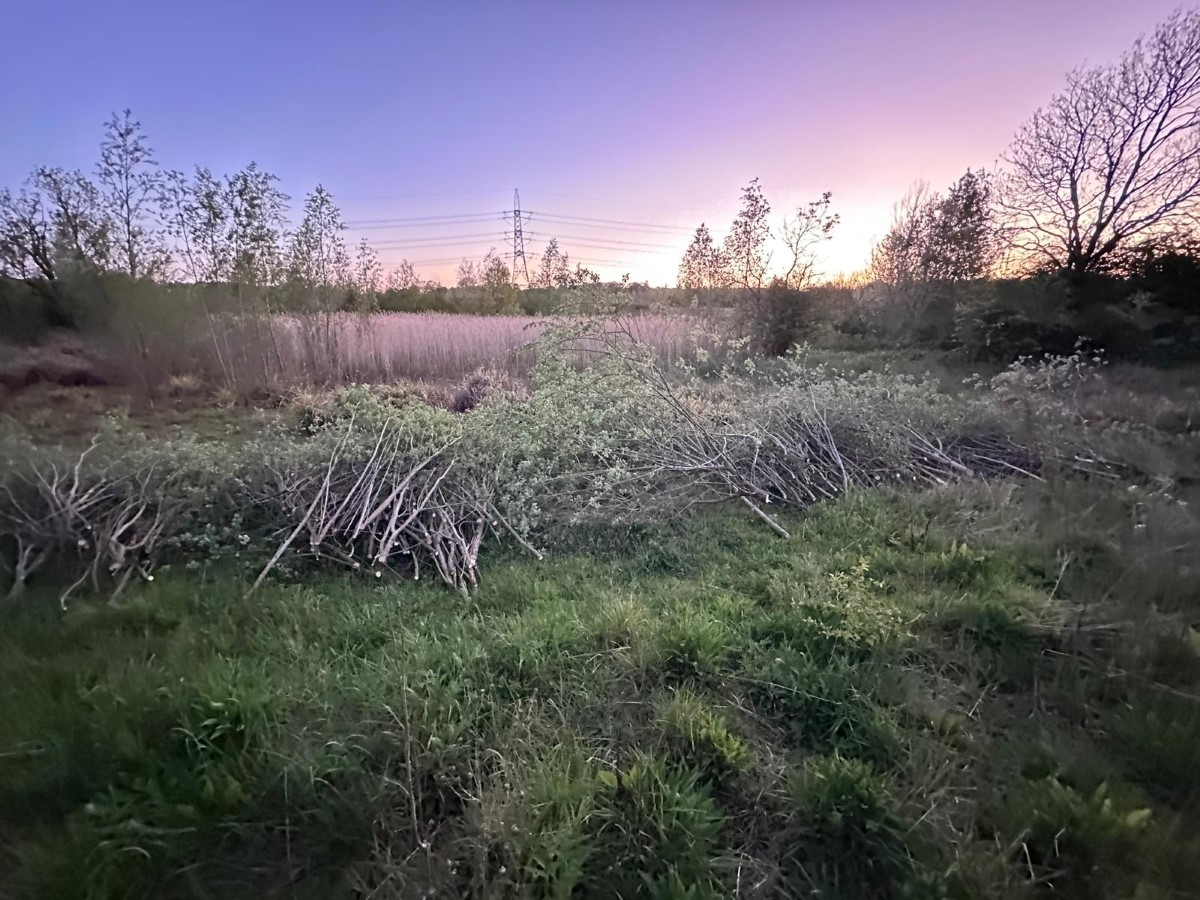
As part of our work supporting the woodlands in and around Sutton Bonington we have begun to coppice some of the willow trees, surrounding the wetland area in Jubilee woodland.
What is coppicing?
Coppicing is a traditional woodland management technique that dates back to the Stone Age. It involves felling trees at their base, where new shoots will grow. You can recognise a coppiced tree by the many thin branches at its base.
Why is coppicing important?
Coppicing has many benefits and is primarily a way of improving the health and biodiversity of a woodland. Coppicing or thinning trees can open up a wooded area to the sunlight, which allows a wider range of plants to flourish. waste branches from coppicing, known as the brash, can be stacked to create habitat piles, which provide a good substitute for bramble thicket and attract nesting birds. Over time the growing trees block out the sunlight once more and the bramble will die off until another tree falls or is coppiced. With a coppice in full rotation, there will be a range of habitats, increasing the biodiversity of the woodland.
Coppicing can also help to provide a home for declining, native species. For example, dormice depend on the diverse type of woodland created by coppicing, which results in a dense understory (the layer of vegetation below the main canopy). Dormice are naturally arboreal, spending much of their lives in trees, bushes or bramble and the understory provides them not just with food and shelter but also a safe way to travel through woodland without setting foot on the ground.


Why is coppicing beneficial for the wetland area in Jubilee woodland?
Coppicing and removing specific trees such as willow can also maintain a stable environment in ponds and wetland areas. Willow’s rapid growth and aggressive root system can lead to choking of shallow water bodies and a decline in water quality. Decaying leaves dropped from the trees also release nutrients like phosphorus and nitrogen, which can lead to further algae growth and sludge build up, removing oxygen from the water. The many large willow trees that surround the wetland area suck up a large amount of water from the pond, drying it out over the summer and decrease the survival rate of species that depend on these water bodies.
As willow is a tree that will reseed itself if left on the woodland floor we have combined the preservation of our woodland areas with promoting good animal welfare by donating the removed willow to Twycross Zoo to improve the diet of many of their browse loving species such as gorillas, orangutans, rhinos and giraffe.