
Gibbons are highly adapted to a life in the trees
Gibbons have highly specialised adaptations that directly influence their nutritional and energetic needs. Because gibbons are strictly arboreal, brachiation (swinging from branch to branch) comprises the vast majority of their locomotor activity. The muscles of their forelimbs is remarkably adapted for this movement. This highly active lifestyle demands a rapid and readily available source of calories. Consequently, gibbons generally have higher metabolic rates and rely on the quick processing of easily digestible, energy-dense foods, such as ripe fruits. Furthermore, their gracile body plan limits the amount of heavy, fermenting fibrous plant matter they can comfortably carry while brachiating through the high canopy.
Dentition
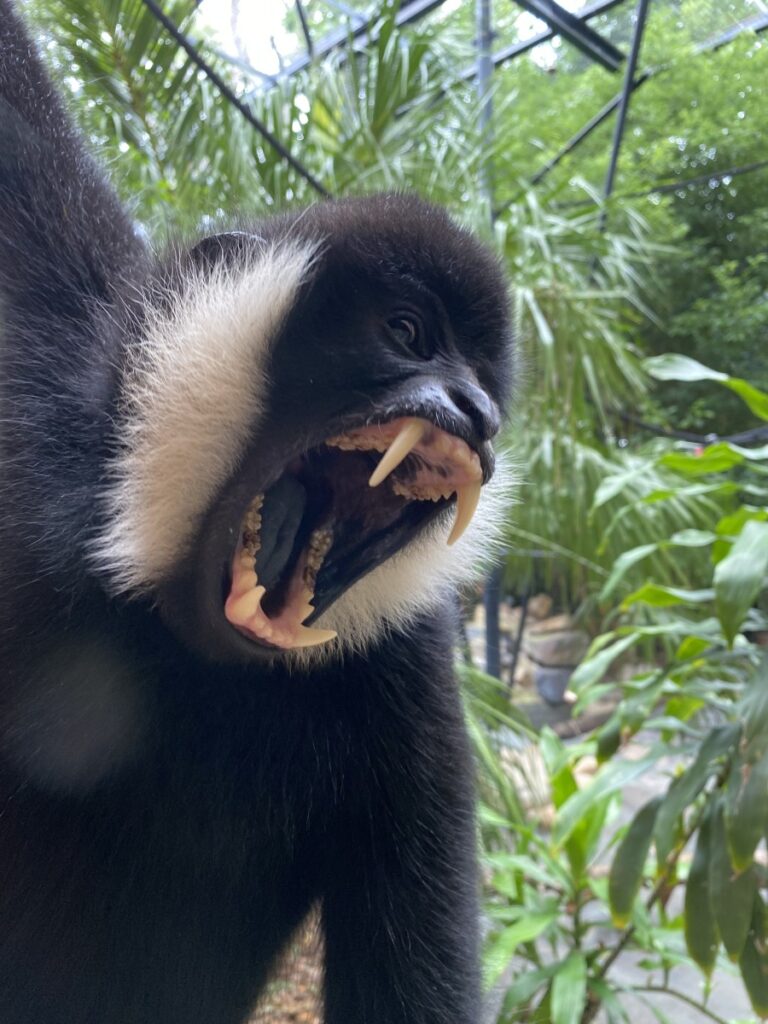
To efficiently process these preferred foods, gibbon dentition is specialised to reflect specific dietary niches. Unlike leaf-eating monkeys that possess sharp, shearing crests on their teeth designed to shred tough cellulose, most gibbons have rounded molars. These rounded cusps are perfectly adapted for crushing the soft pulp and skins of ripe fruits rather than grinding highly fibrous plant material. While gibbons do possess very long, sharp canines, these teeth are primarily used for defense, territorial displays, and social functions, rather than for capturing prey or actively processing their daily food.
Gastrointestinal system
The gastrointestinal anatomy of most gibbons further reflects their diet. Species within the genus Hylobates typically possess a relatively simple stomach and a shorter gastrointestinal tract compared to more specialised leaf-eating primates. Frugivores naturally exhibit shorter gut transit times, which allows them to quickly extract sugars and essential nutrients from fruit without retaining bulky, low-energy material for extended periods. However, the siamang represents a notable physiological exception. As the largest of the gibbons, weighing between 10 and 12 kilograms, the siamang’s larger body size accommodates a correspondingly longer digestive tract. This extended gut allows them to retain digesta for much longer periods, facilitating the microbial fermentation of fibrous plant material and explaining why siamangs can successfully maintain a diet consisting a larger proportion of leaves and high-fiber figs than other gibbon species.
The GI microbiome
The processing of this plant matter is heavily reliant on a complex, symbiotic gut microbiome. The gibbon gastrointestinal tract is largely dominated by the bacterial phyla Firmicutes and Bacteroidota, which play critical roles in the fermentation and assimilation of nutrients from plant-based food sources. Other highly prevalent bacteria within their digestive systems include Prevotella and Lachnospiraceae. Recent genetic analyses indicate that a primate’s specific host species actually has a greater impact on shaping its gut microbial community structure than its immediate diet does. This suggests that a gibbon’s digestive system is evolutionarily hardwired to process very specific natural dietary profiles, underscoring the necessity of replicating their wild nutritional composition in a captive sanctuary setting to maintain proper gut flora and overall metabolic health.