
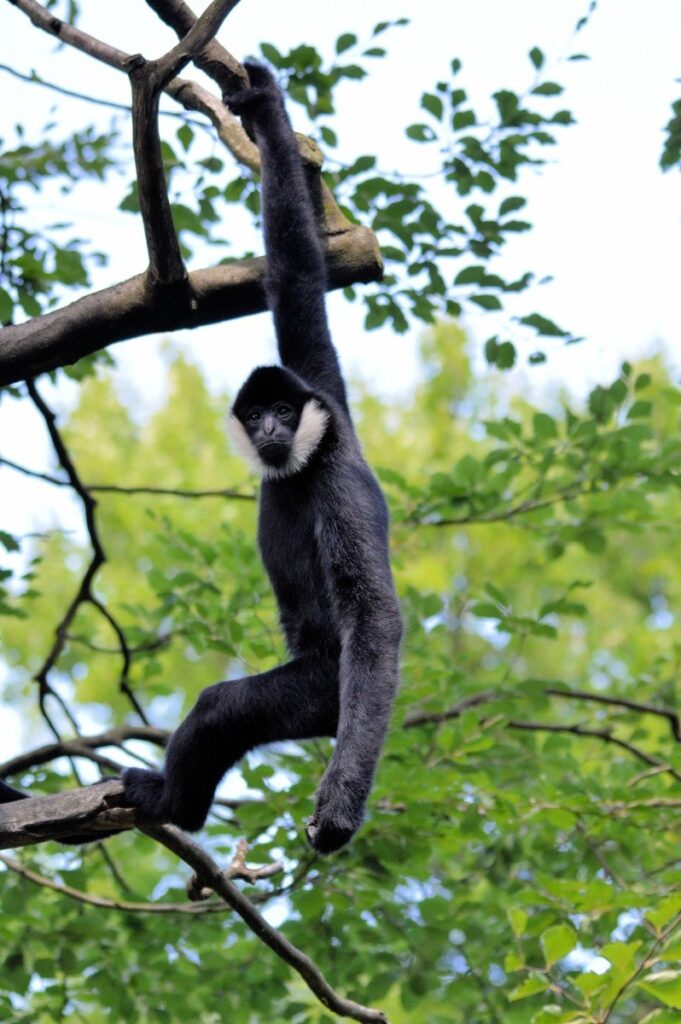
Gibbons are arboreal primates, highly adapted to a life in the trees. They spend much of their time high in the forest canopy foraging for food, being most active during the morning period. Gibbons often follow foraging trails and have been known to stop at between 9 to 12 locations daily to feed. They make decisions on where to forage and what to consume based on their knowledge of their habitat and where preferred food items are found at certain times of the year.
Gibbons are considered frugivorous (fruit eating) animals, with differences between species and populations, which are mostly dictated by seasonal fruit availability. However, this does not mean gibbons only eat fruit, they also consume twigs, tree bark, flowers, fresh shoots and leaves, and some invertebrates. Wild fruits are also quite different from the ones humans consume. Many of the fruiting trees they feed upon only bear fruit every other year, and most of them are seasonal, therefore they need to adapt to what is “on offer” in the forest. Even though wild fruits are usually preferred by gibbons when available, leaves and other parts of the vegetation, for example flowers, shoots, can make up an important part of the diet in seasons when fruit availability is limited.
For most gibbons the preferred food items are non-fig fruits, comprising the majority of the diet when these are readily available. However, they readily utilise fallback foods, when preferred foods are scarce. Figs are an important part of wild gibbon diets, and can comprise as much as 45% of the consumed food. Fresh leaves and flowers are also frequently consumed, but the amount gibbons eat varies greatly. There are also differences between species, as well as different geographical locations. For example siamangs eat a larger proportion of leaves and figs, compared to many other gibbons, in some habitats this being 90% of their diet.